3D Volcano Model for a School Project
Turn printed pages into a 3D volcano with a labelled cross section and four scenes to explore. Print, cut, fold and glue your paper model together.
English PDF · Instant digital download · No physical item
A Hands-on Volcano Model for Science and Geography Projects
Need a volcano model for a school assignment? The scenery and information cards are already illustrated, giving children a starting point for building, learning and explaining their project.
This printable volcano model has English labels and instructions. Use its four scenes to discuss what happens inside a volcano and how eruptions change the surrounding environment.
Four Scenes, One Volcano Model
Build the four sections and bring them together into a display that children can explain from different sides.
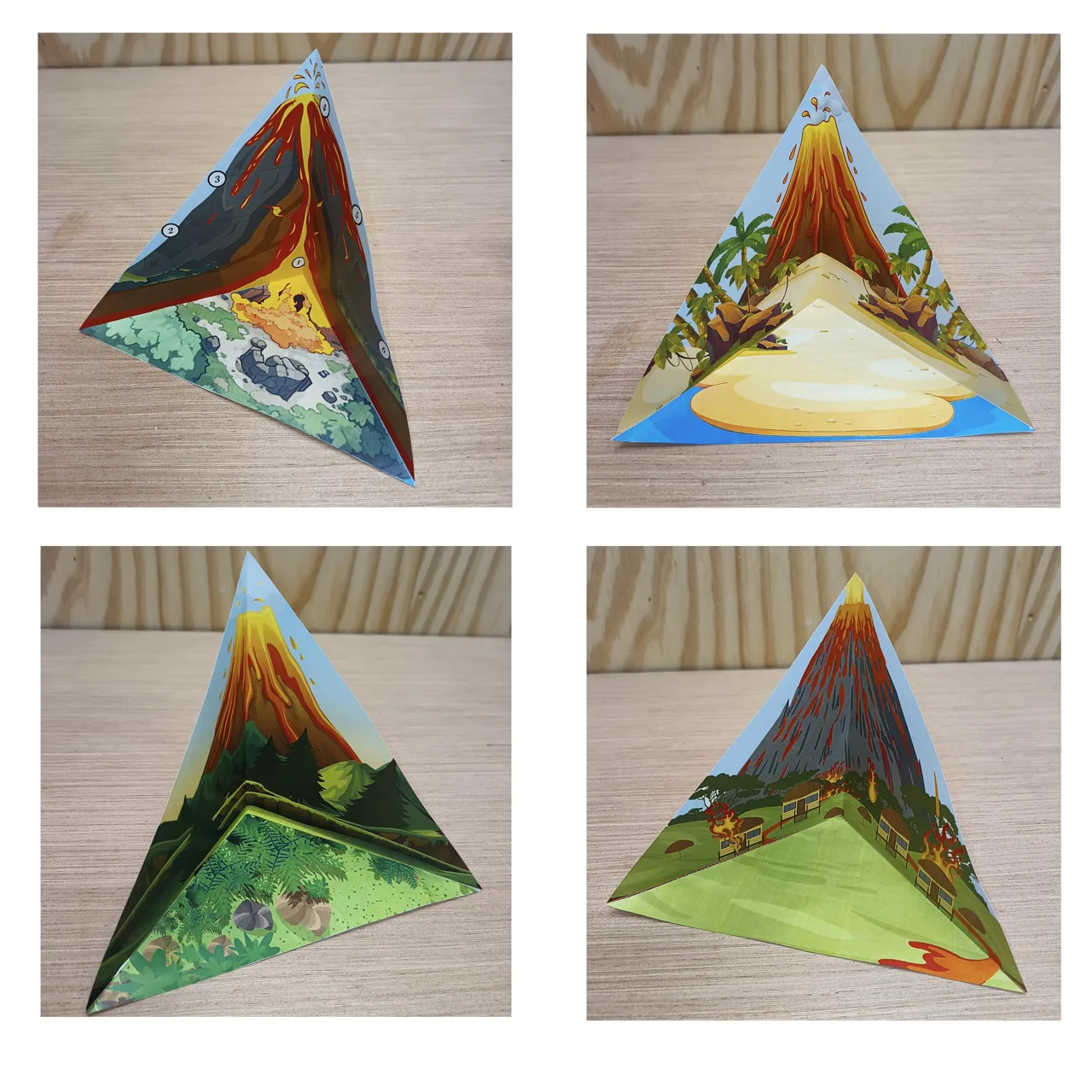
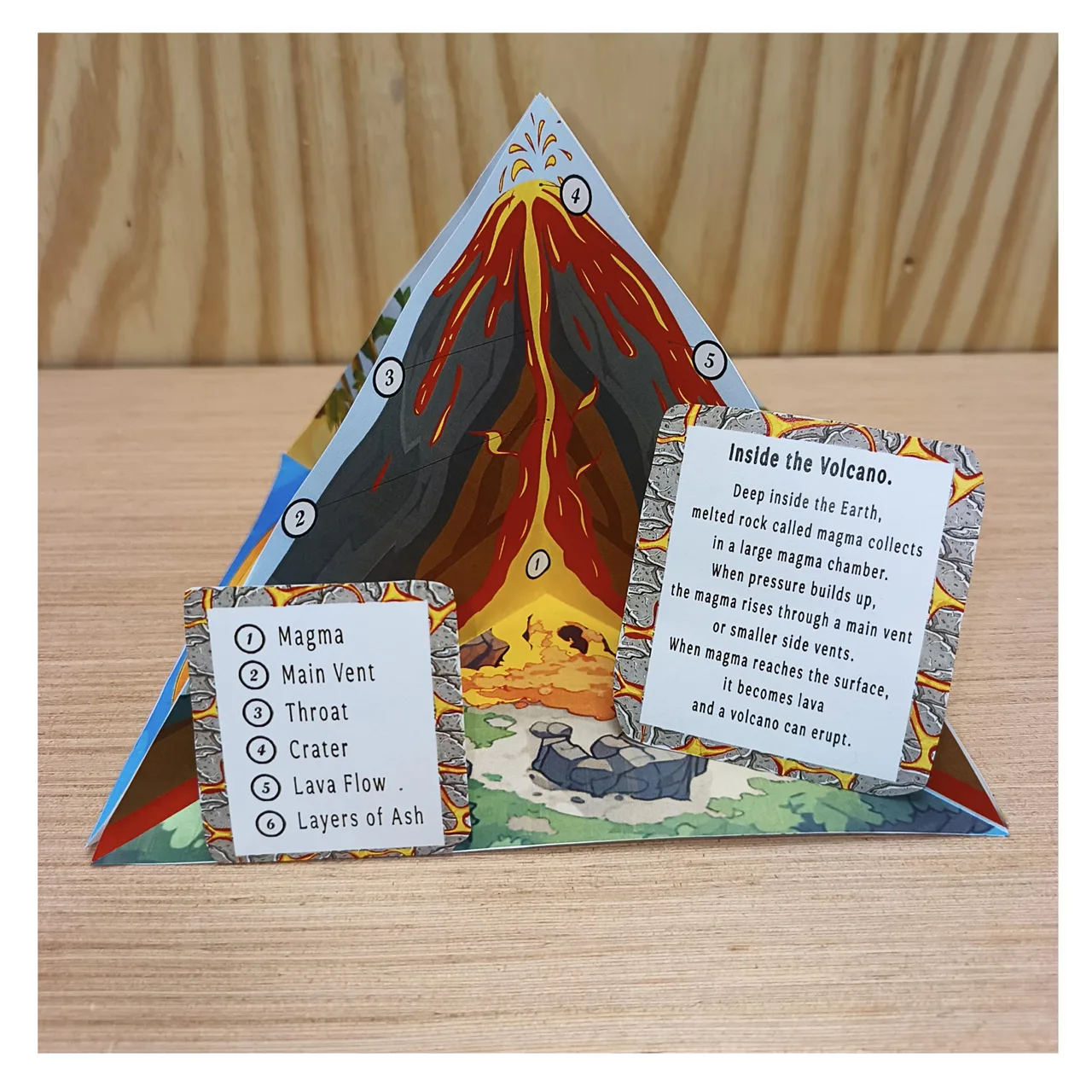
- Inside a volcano: trace the route from magma to the crater and lava flow.
- New land from lava: explore how cooled lava can build new land.
- Rich volcanic soil: discuss how weathered volcanic material can contribute minerals to soil.
- Eruption hazards: show how lava and other volcanic hazards can affect homes and the environment.
A Volcano Cross Section with Labelled Parts
The numbered cross section and matching English key identify magma, the main vent, throat, crater, lava flow and layers of ash. Children can point to the parts while explaining their model.
What You Get in the Printable PDF
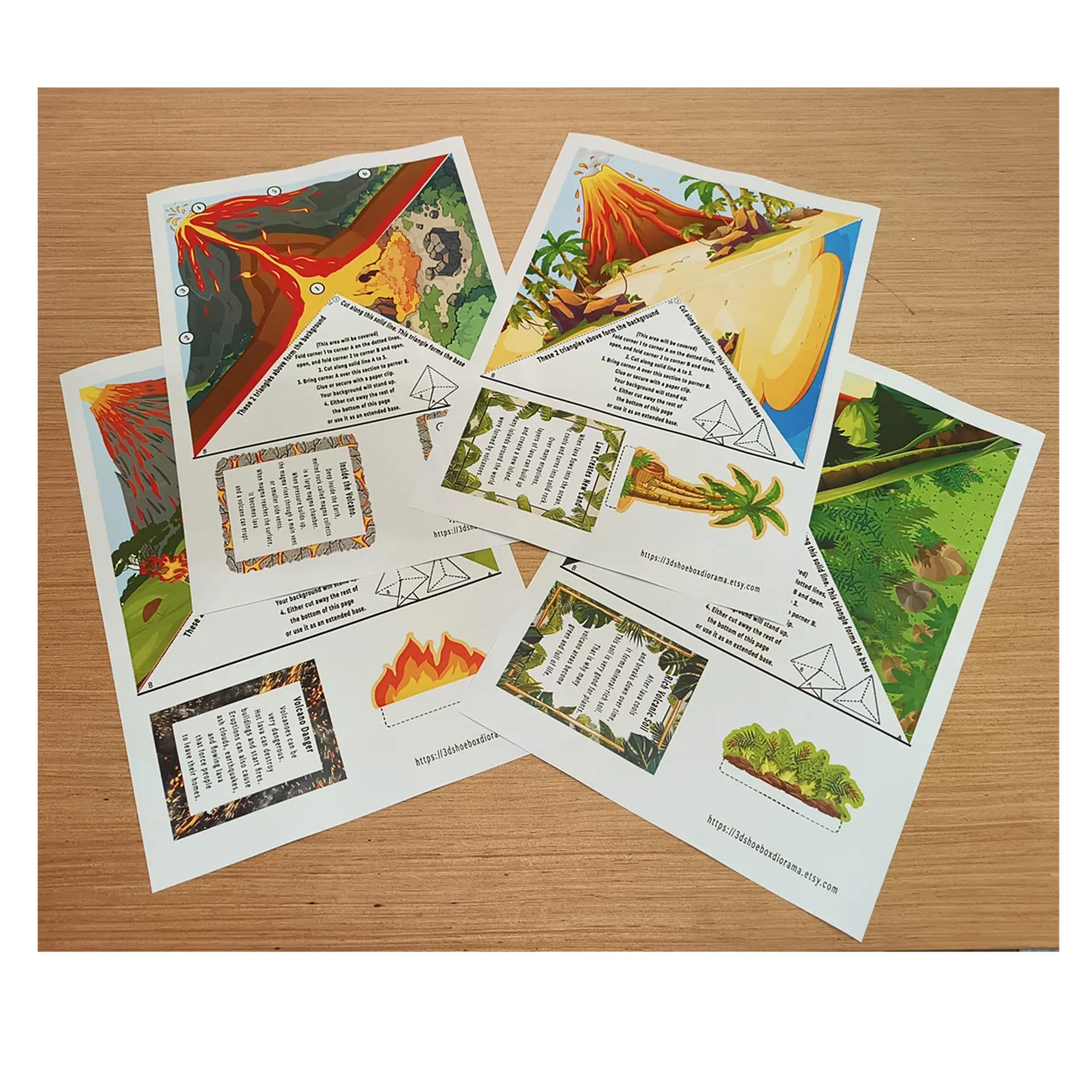
- Illustrated templates for four volcano scenes.
- Cut-out pieces and folding tabs for assembling the 3D sections.
- English instructions and educational information cards.
This is a printable paper display model. It does not include a working eruption experiment.
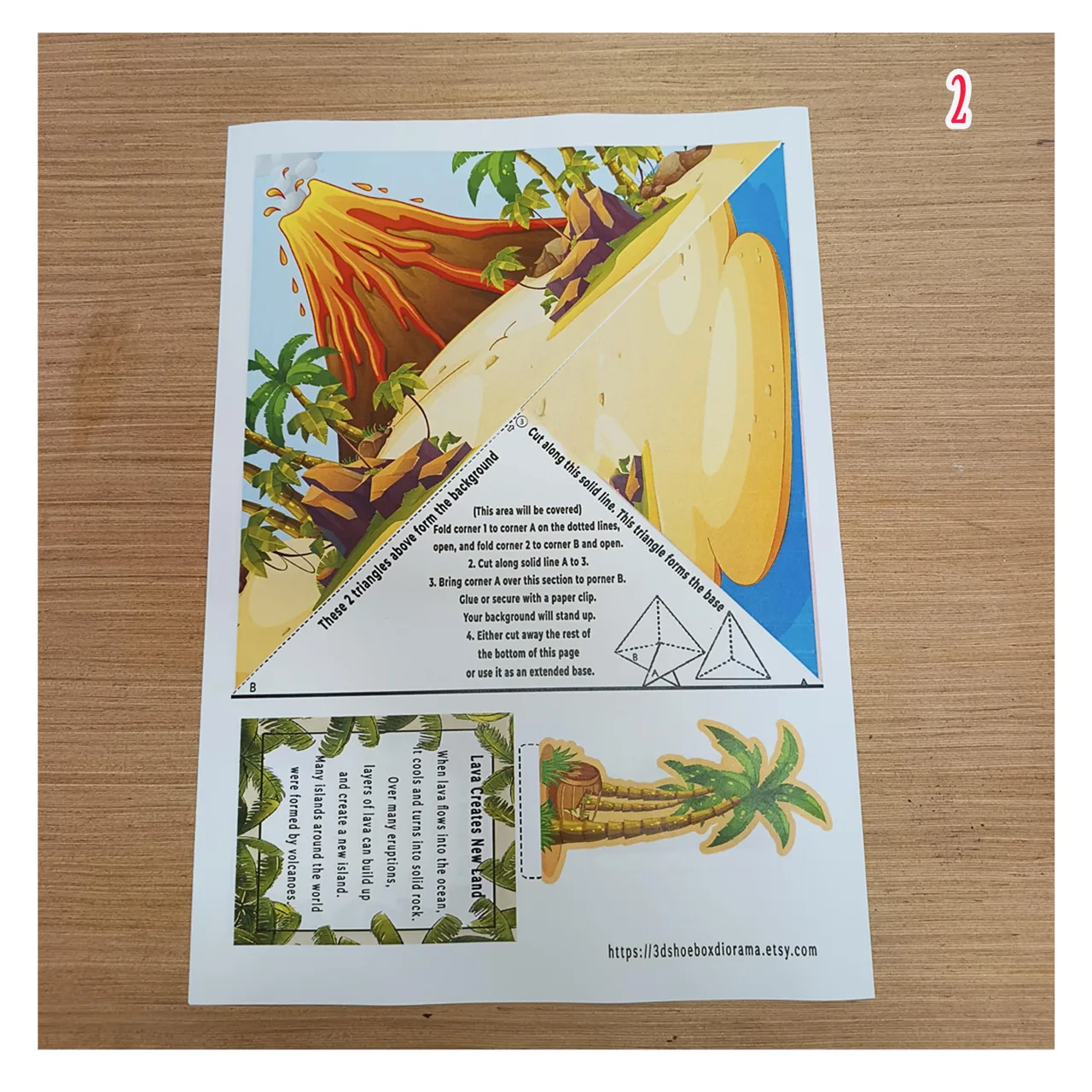
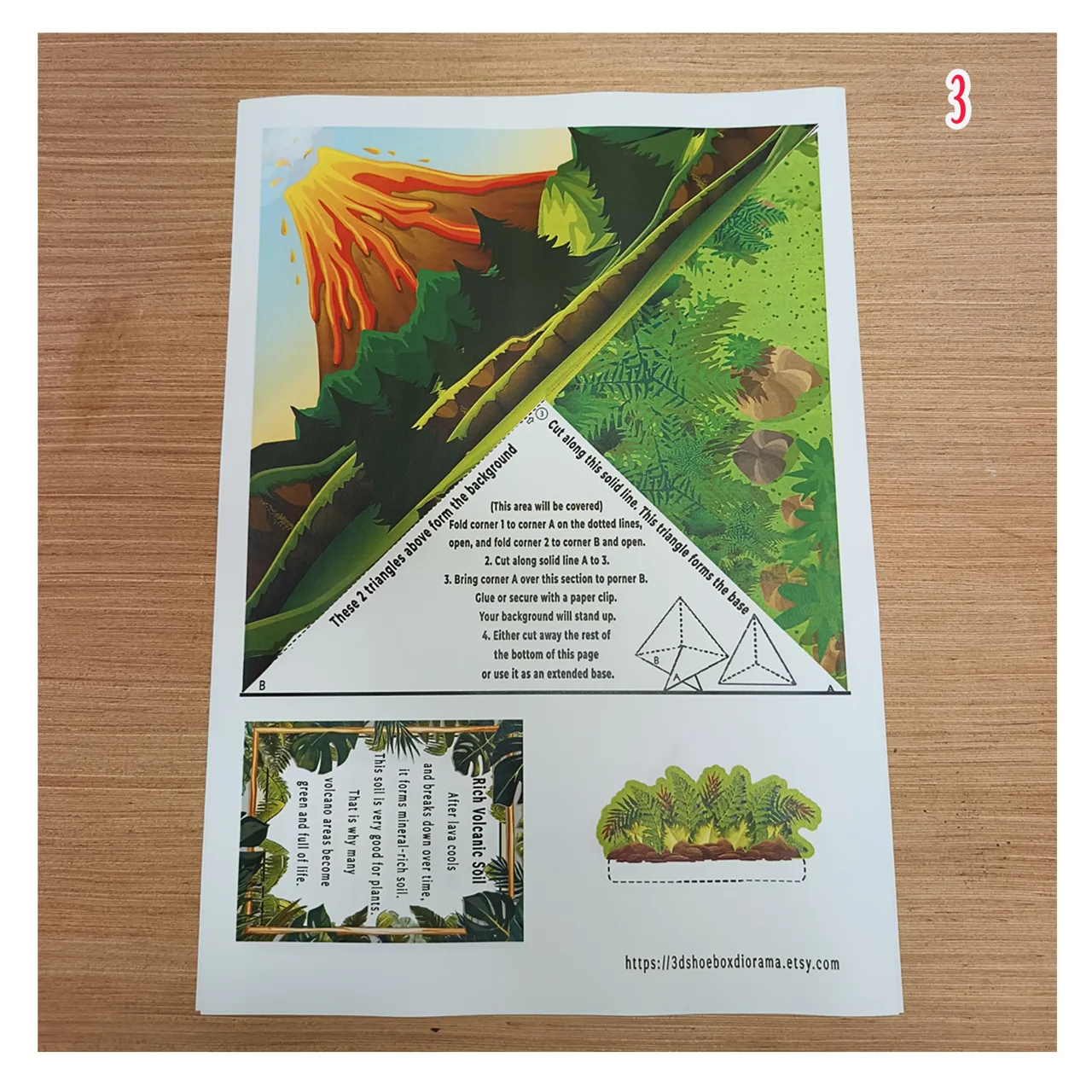
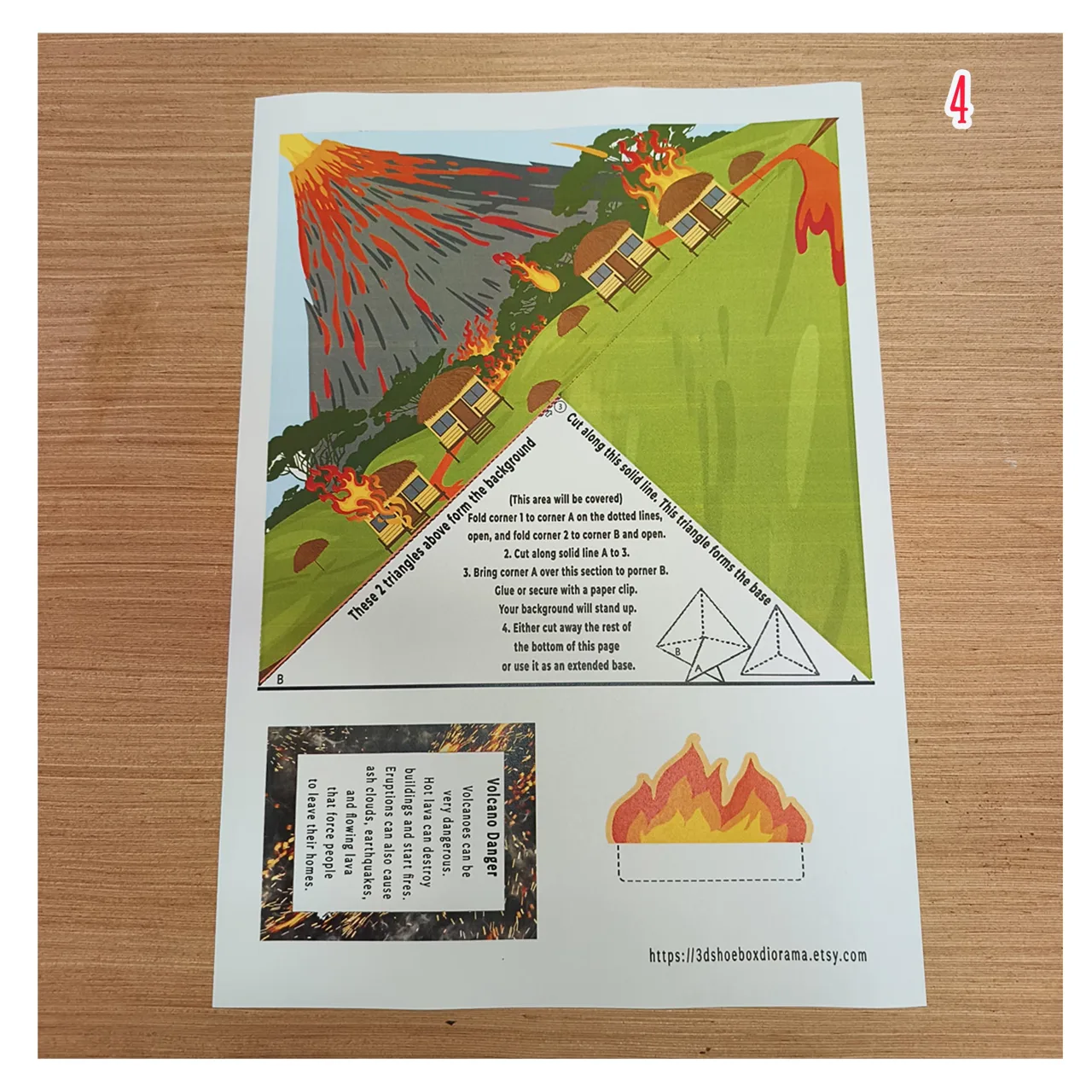
How to Make Your Paper Volcano Model
You will need a printer, paper, scissors and glue. Younger children may need an adult’s help with cutting and assembly.
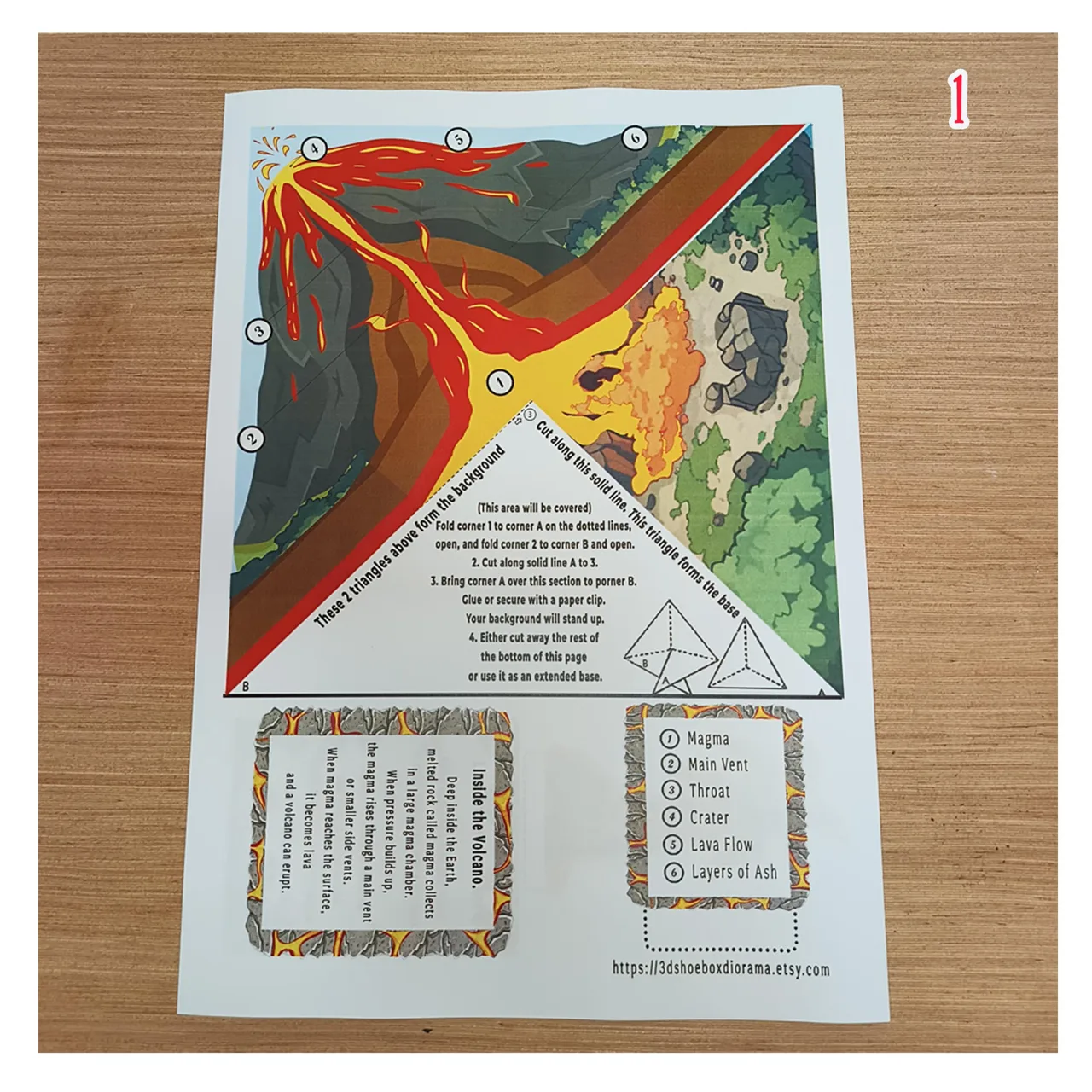
Print the illustrated templates and read the instructions.
Cut and Fold
Cut along the indicated lines and fold the tabs and sections.
Glue and Explain
Assemble the scenes and use the information cards to describe what they show.
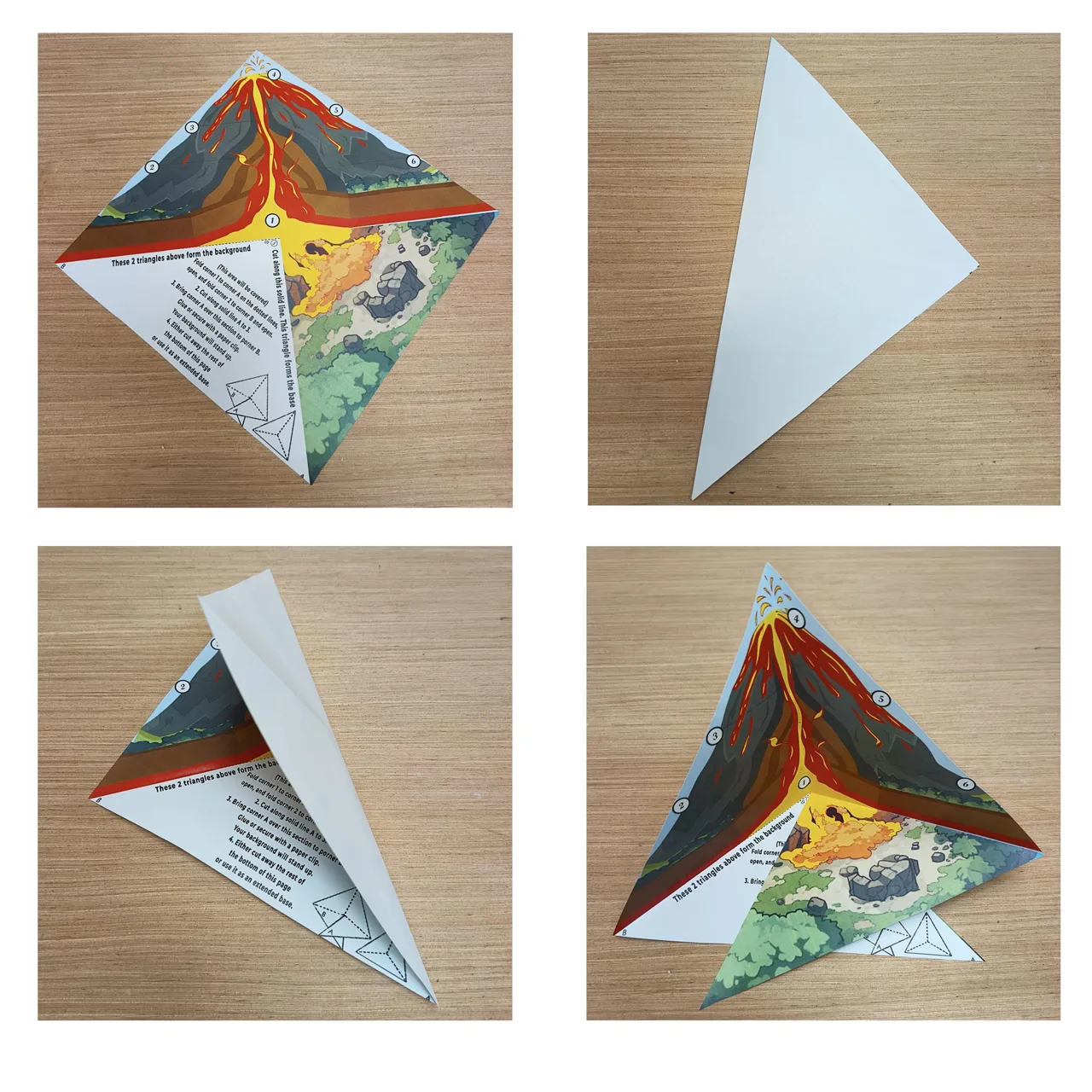
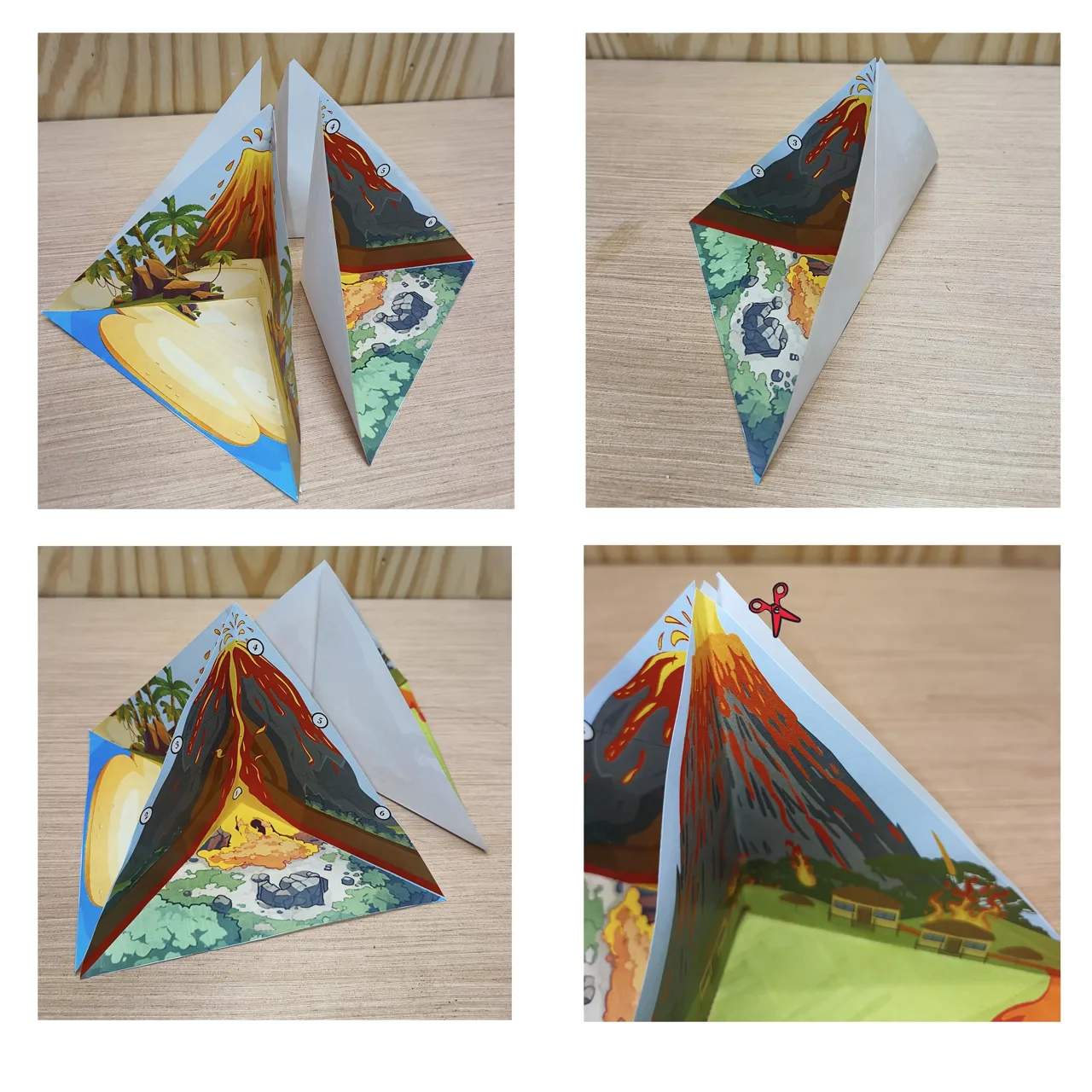
See the Complete 3D Volcano Model from Every Side
Watch the finished paper model rotate to reveal its labelled cross section and four volcanic scenes. See how the assembled display can support your science or geography school presentation in the Philippines.
Explore How Volcanoes Change the Landscape
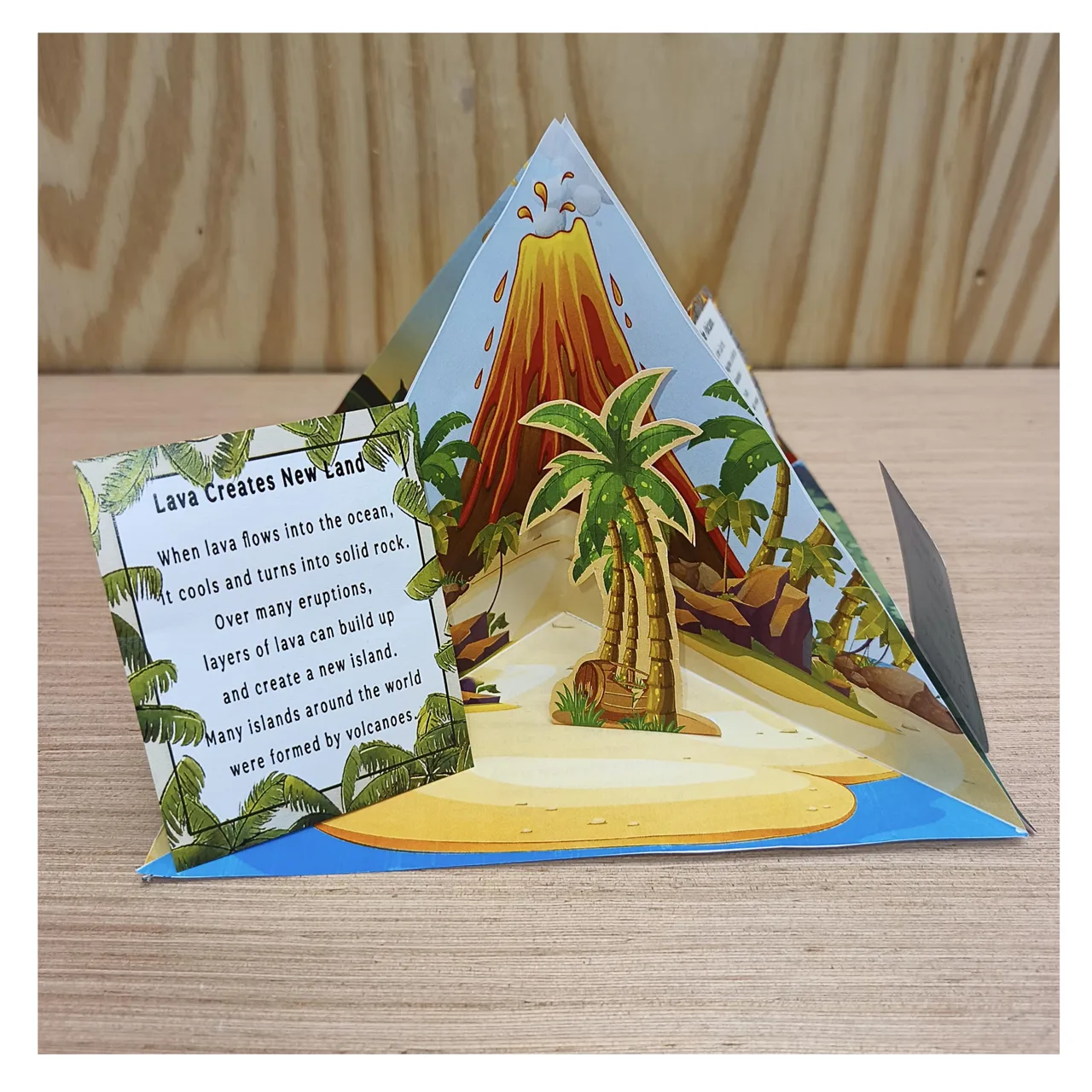
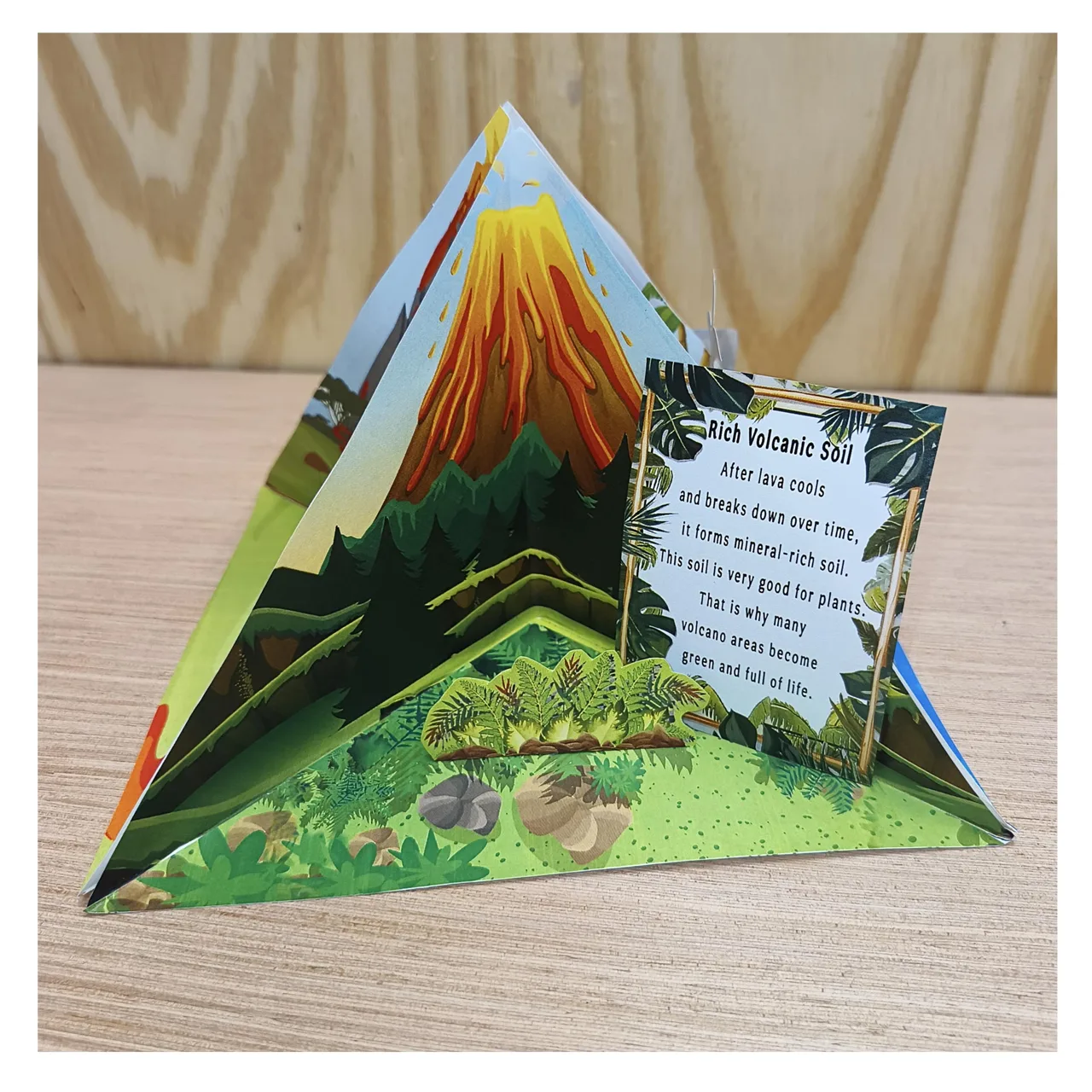
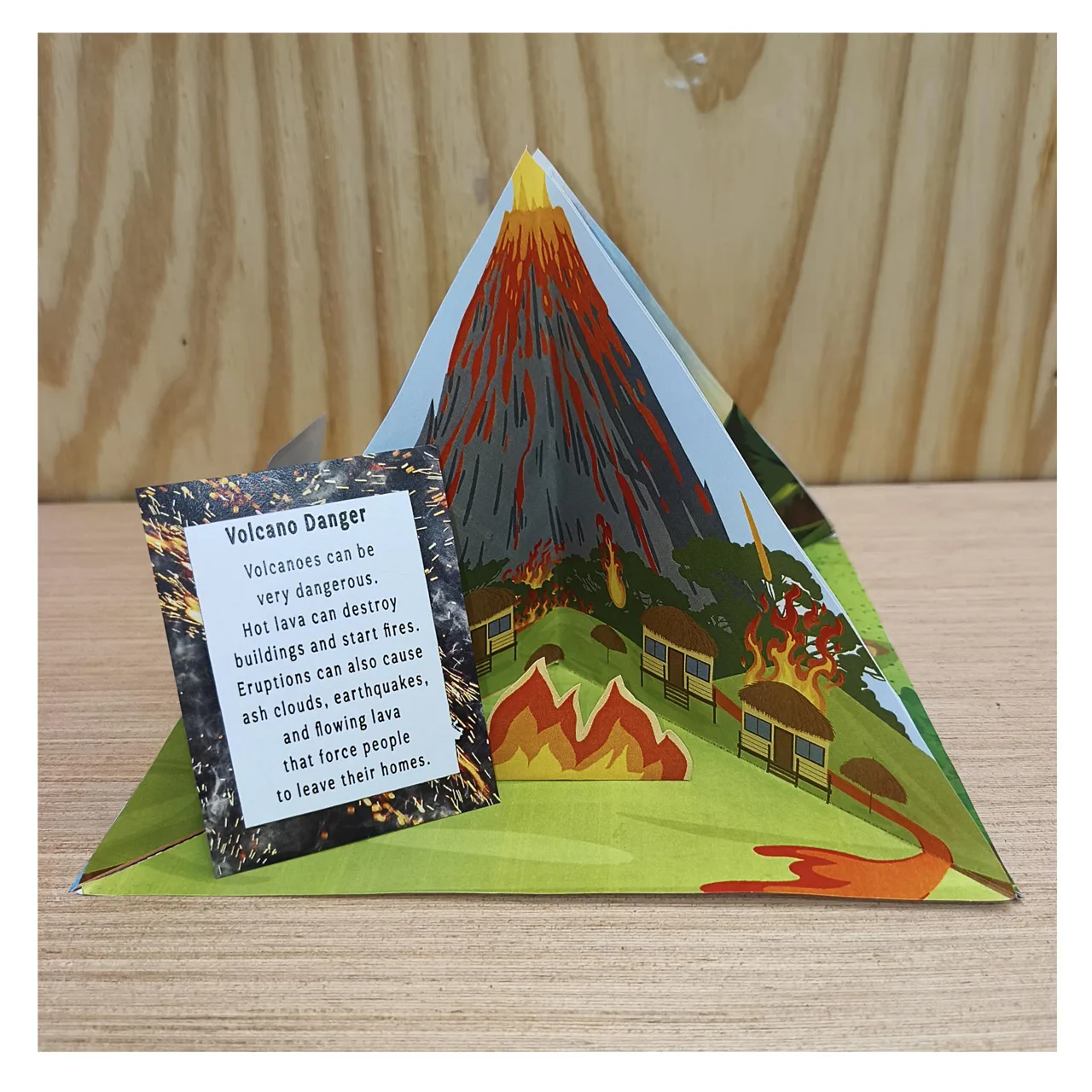
Mayon Volcano: A Philippine Example for Your School Model
Mayon is an active volcano in Albay, in the Bicol Region of Luzon. It gives Filipino students a real example to connect with the volcano parts and processes shown in their paper model.
Use the numbered cross section to point out magma below the surface, the main vent and the crater. Explain that molten rock is called lava when it reaches the surface. Then explore the other scenes to discuss how volcanic activity can form land, how weathered volcanic material can contribute to soil, and how eruptions can affect nearby communities.
This printable diorama is a general volcano teaching model, not an exact replica or scientific diagram of Mayon. Its four scenes illustrate different volcanic processes; they do not show four specific locations around Mayon.
A Simple Classroom Activity
- Find the Philippines, Luzon and Albay on a map. Mark the location of Mayon Volcano.
- Compare a photograph of Mayon with your paper model. Which features look similar? What details are different?
- Point to the numbered parts and explain the difference between magma and lava.
- Choose one landscape scene and explain what it teaches about volcanoes.
For official volcano information, explore the PHIVOLCS list of Philippine volcanoes. For current activity and safety advice, follow PHIVOLCS and local authorities.
How to Explain Your Volcano Model in Class
Children can use these short sentences as a starting point, then practise explaining the model in their own words:
“This is my 3D volcano model. The cutaway lets us see parts inside a volcano.”
“Molten rock below the surface is called magma. When it reaches the surface, we call it lava.”
“I can point to the main vent, the crater and the lava flow using the numbered labels.”
“Mayon in Albay is an active volcano in the Philippines. My model helps explain volcano parts, but it is not an exact copy of Mayon.”
“The other scenes show how volcanoes can create land, contribute to soil formation and cause hazards.”
For a short school presentation, choose two or three sentences and point to the matching parts as you speak. Check your teacher’s instructions for any extra facts or diagrams you need.
Before You Start
Can I use this model for a school project about Mayon Volcano?
Yes, as a general teaching model alongside a map and real photographs of Mayon. It can help explain volcano parts and processes, but it does not reproduce Mayon’s exact shape or internal structure. Use an appropriate reference if your assignment requires an accurate Mayon diagram.
Is this a physical model or a digital download?
You receive a PDF to print and assemble yourself. No printed pages, tools or finished model are shipped.
Does the volcano erupt?
No. It is a paper display model for explaining volcano structure and the surrounding environment, rather than a baking-soda eruption experiment.
What language is the project in?
The templates, labels, instructions and educational cards are in English.
Can we use it for a science or geography assignment?
The model covers volcano structure, land formation, soil and environmental hazards. It can support science, geography and environmental studies assignments.
Ready to Build Your Volcano Model?
Get the printable English PDF and turn its four scenes into your own 3D school display.
Digital PDF · Secure checkout